The Rhodes 22 Discussion Group
< prior
Back to Month
Go to Thread

cody nowak
Rhodes22-list Digest, Vol 2730, Issue 1
2011-11-30; 14:19:28 EST
Member Since
2010-04-26
Posts: 13
I am reluctantly selling my 1986 Rhodes 22/ trailer - Boat is in excellent shape w/inter-mast furling and furling jib, bought in 2010 new leftover 2009 Yamaha 9.9 Electric start long shaft O/B, depth gauge ,UHF radio and more. Trailer was just refurbished (Springs, axle, new ball holder. Boat is on the Nassau/Suffolk boarder on the Southshore of Long Island N.Y. Phone# is 631-837-8725. Am asking $12,000 neg. Ask for BobSee the original archive post
> From: rhodes22-list-request at rhodes22.org
> Subject: Rhodes22-list Digest, Vol 2730, Issue 1
> To: rhodes22-list at rhodes22.org
> Date: Wed, 30 Nov 2011 12:00:38 -0500
>
> Send Rhodes22-list mailing list submissions to
> 	rhodes22-list at rhodes22.org
>
> To subscribe or unsubscribe via the World Wide Web, visit
> 	http://www.rhodes22.org/mailman/listinfo/rhodes22-list
> or, via email, send a message with subject or body 'help' to
> 	rhodes22-list-request at rhodes22.org
>
> You can reach the person managing the list at
> 	rhodes22-list-owner at rhodes22.org
>
> When replying, please edit your Subject line so it is more specific
> than "Re: Contents of Rhodes22-list digest..."
>
>
> Today's Topics:
>
>    1. Three Ethanol Myths Clarified (Michael D. Weisner)
>    2. Re: Three Ethanol Myths Clarified (Rick)
>    3. Re: Three Ethanol Myths Clarified (Lowe, Rob)
>    4. Re: Three Ethanol Myths Clarified (Rob Granger)
>    5. Re: Three Ethanol Myths Clarified (Lowe, Rob)
>
>
> ----------------------------------------------------------------------
>
> Message: 1
> Date: Tue, 29 Nov 2011 13:37:19 -0500
> From: "Michael D. Weisner" <mweisner at ebsmed.com>
> Subject: [Rhodes22-list] Three Ethanol Myths Clarified
> To: "'The Rhodes 22 Email List'" <rhodes22-list at rhodes22.org>
> Message-ID: <00a501ccaec5$eddfcfc0$c99f6f40$@com>
> Content-Type: text/plain; charset="us-ascii"
>
>
> This may answer some of your questions about ethanol gasoline mixes and shed
> light on the problems we have had with the engines.
>
>
> Mike
>
> s/v Shanghai'd Summer ('81)
>
> Nissequogue River, NY
>
>
>
>
>
> Three Ethanol Myths Clarified
> <http://www.boatus.com/magazine/2011/december/ethanol.asp>
>
>
> By Bob Adriance
>
>
> It's time we get to the bottom of how E10 is affecting our engines
>
> In the few years since ethanol began to be widely used in the United States,
> a lot has been written about its properties, the problems it's created, and
> how to best cope with its possible effects. Some of the advice has been
> based on science, some on hearsay. While E10 is not an ideal fuel - and E15
> could cause serious problems for marine engines - at least a few myths about
> ethanol have arisen with the potential to do more harm than good:
>
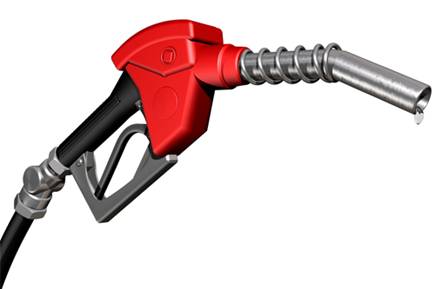
> http://www.boatus.com/magazine/2011/december/assets/img/ethanol.jpg
>
>
> Myth #1: Ethanol-enhanced gasoline (E10) loses octane much faster than
> regular gasoline.
>
>
>
> Many mechanics believe that octane loss during winter storage could be great
> enough to damage an engine when it's run in the spring. These same mechanics
> will often recommend leaving the tank almost empty so that fresh gasoline
> can be added in the spring to raise depleted octane levels. While all
> gasoline loses octane as it ages, ethanol-enhanced gasoline loses octane at
> about the same rate as regular gasoline, according to Jim Simnick, a
> technical advisor at BP Global Fuels Technology, and Lew Gibbs, a senior
> engineering consultant and Chevron Fellow. The two men have over 75 years of
> combined experience working with gasoline and both agree that the loss of
> octane over the winter would not be sufficient to damage an engine. Note,
> however, to keep any gasoline, including E10, as fresh as possible; they
> said it's good practice to always add fuel stabilizer - an antioxidant -
> whenever the boat will be idle for long periods.
>
> The recommendation to leave a tank mostly empty is bad advice; it could
> significantly increase the amount of water that gets into the tank. When
> enough water enters through the vent, the ethanol will separate ("phase
> separate") from the gasoline. Leaving a tank mostly empty does three things
> to increase the chances of phase separation:
>
> It increases the volume of open space in the tank (its "lung capacity") so
> it can "breathe in" damaging moist air. An almost-empty tank leaves more
> space on tank walls for condensation to form. Leaving less gasoline in the
> tank means there will be less ethanol to absorb the condensation.
>
> It's interesting to note that in areas of the Midwest that have been dealing
> with E10 for over a decade, topping off tanks is common practice. (As an
> alternative, completely emptying the tank would eliminate any chance of
> phase separation.)
>
> If phase separation occurs, the highly corrosive ethanol/water mixture will
> settle to the bottom of the tank and remain there even after fresh fuel is
> added in the spring. The only way to remedy the problem would then be to
> drain the tank and add fresh gasoline. The best way to avoid phase
> separation over the winter (aside from emptying the tank) is to leave the
> tank 95-percent full (which allows for expansion) so that there's less moist
> air in the tank, less space for condensation to collect, and more gasoline
> to absorb whatever moisture does accumulate.
>
>
> Myth #2: E10 attracts water, so it's important to install a water separator
> to prevent the water reaching the engine.
>
>
>
> Mercury Marine, which recently hosted a Webinar on ethanol myths, noted that
> ethanol does not "grab water molecules out of the air." It is hydrophilic,
> which means ethanol holds water. With regular gasoline (E0) as well at E10,
> the primary cause of water collecting in tanks is condensation on tank
> walls. But unlike E0, which can absorb almost no moisture, E10 can hold up
> to half of one percent of water by volume, and the water molecules will
> dissolve in the fuel. The "solubilized" water will bypass the water
> separator and burn harmlessly through the engine. Only if phase separation
> were to occur would a water separator do its job, but by then the fuel
> itself would be the problem. The phase-separated water/ethanol mixture would
> settle on the bottom of the tank near the fuel pick-up and would quickly
> stall out or even damage your engine. And because ethanol is used to boost
> octane, the remaining (low-octane) gasoline at the top of the tank would
> also have the potential to damage your engine.
>
> Note, however, that a fuel filter (10-micron) is essential to keep gunk from
> reaching your engine. Ethanol is a solvent that dissolves resins, rust, and
> dirt that have accumulated on older tank walls. Especially when you first
> make the transition to E10, it's important to carry spare filters and a
> galvanized bucket to store used filters prior to disposal. Even in new
> engines and tanks, E10 will sometimes form a mysterious gooey substance that
> will also clog filters. Richard Kolb, the manager of Emissions and
> Regulations for Volvo Penta, believes the goo is caused by water mixing with
> one or more of the 108 approved compounds that can be used in gasoline.
> These compounds vary among suppliers, so one solution is to change to a
> different brand of gasoline. Another is to use carburetor cleaner, which he
> says has sometimes remedied the problem.
>
>
> Myth #3: Certain additives can prevent phase separation?
>
>
>
> Both Gibbs and Simnick said that the additives that eliminate water may work
> incrementally to protect against phase separation, but Joe Simnick stressed
> that no additives will stand up to a good slug of water. Lew Gibbs added
> that the best way to prevent phase separation in E10 is to "keep it dry,
> keep it dry, keep it dry." That means keeping the tank filled to prevent
> condensation. Mercury Marine has also noted that, contrary to statements
> made by some companies that produce fuel additives, there are no additives
> that can make stale or phase-separated gasoline usable.
>
> E10 is certainly not as trouble-free as E0, especially the first few
> tankfulls. But for newer engines, those built after about 1991, there's no
> reason the initial problems can't be overcome. No less an authority than
> Mercury Marine says, "After the transition period from E0, E10 may actually
> be a superior marine fuel as it tends to keep low levels of water moving
> through the fuel system, keeping the
> system 'dry.'"http://www.boatus.com/magazine/assets/img/StoryEnd.png
>
> Bob Adriance is Editor of Seaworthy, the BoatUS Marine Insurance
> damage-avoidance publication, and author of Seaworthy, Essential Lessons of
> Things Gone Wrong (published by International Marine/McGraw Hill, available
> at www.Amazon.com
> <http://www.amazon.com/gp/product/007145327X/qid=1137435438/002-5727410-9825
> 655>  and major bookstores).
>
>
>
> -------------- next part --------------
> A non-text attachment was scrubbed...
> Name: not available
> Type: image/jpeg
> Size: 11250 bytes
> Desc: not available
> Url : http://www.rhodes22.org/pipermail/rhodes22-list/attachments/20111129/77508568/attachment.jpeg
> -------------- next part --------------
> A non-text attachment was scrubbed...
> Name: not available
> Type: image/png
> Size: 577 bytes
> Desc: not available
> Url : http://www.rhodes22.org/pipermail/rhodes22-list/attachments/20111129/77508568/attachment.png
>
>
> ------------------------------
>
> Message: 2
> Date: Tue, 29 Nov 2011 20:45:46 -0500
> From: Rick <sloopblueheron at gmail.com>
> Subject: Re: [Rhodes22-list] Three Ethanol Myths Clarified
> To: The Rhodes 22 Email List <rhodes22-list at rhodes22.org>
> Message-ID:
> 	<CABkv36a-+5Ump1XKX5p2EHNCgLw7S8gXN74zgXVW5gx1WRD0SA at mail.gmail.com>
> Content-Type: text/plain; charset="iso-8859-1"
>
> Here's a more scarey picture of an ethanol corroded carburetor float bowl
> taken from a marine engine.
>
> Rick
>
> On Tue, Nov 29, 2011 at 1:37 PM, Michael D. Weisner <mweisner at ebsmed.com>wrote:
>
> >
> > This may answer some of your questions about ethanol gasoline mixes and
> > shed
> > light on the problems we have had with the engines.
> >
> >
> > Mike
> >
> > s/v Shanghai'd Summer ('81)
> >
> > Nissequogue River, NY
> >
> >
> >
> >
> >
> > Three Ethanol Myths Clarified
> > <http://www.boatus.com/magazine/2011/december/ethanol.asp>
> >
> >
> > By Bob Adriance
> >
> >
> > It's time we get to the bottom of how E10 is affecting our engines
> >
> > In the few years since ethanol began to be widely used in the United
> > States,
> > a lot has been written about its properties, the problems it's created, and
> > how to best cope with its possible effects. Some of the advice has been
> > based on science, some on hearsay. While E10 is not an ideal fuel - and E15
> > could cause serious problems for marine engines - at least a few myths
> > about
> > ethanol have arisen with the potential to do more harm than good:
> >
> > http://www.boatus.com/magazine/2011/december/assets/img/ethanol.jpg
> >
> >
> > Myth #1: Ethanol-enhanced gasoline (E10) loses octane much faster than
> > regular gasoline.
> >
> >
> >
> > Many mechanics believe that octane loss during winter storage could be
> > great
> > enough to damage an engine when it's run in the spring. These same
> > mechanics
> > will often recommend leaving the tank almost empty so that fresh gasoline
> > can be added in the spring to raise depleted octane levels. While all
> > gasoline loses octane as it ages, ethanol-enhanced gasoline loses octane at
> > about the same rate as regular gasoline, according to Jim Simnick, a
> > technical advisor at BP Global Fuels Technology, and Lew Gibbs, a senior
> > engineering consultant and Chevron Fellow. The two men have over 75 years
> > of
> > combined experience working with gasoline and both agree that the loss of
> > octane over the winter would not be sufficient to damage an engine. Note,
> > however, to keep any gasoline, including E10, as fresh as possible; they
> > said it's good practice to always add fuel stabilizer - an antioxidant -
> > whenever the boat will be idle for long periods.
> >
> > The recommendation to leave a tank mostly empty is bad advice; it could
> > significantly increase the amount of water that gets into the tank. When
> > enough water enters through the vent, the ethanol will separate ("phase
> > separate") from the gasoline. Leaving a tank mostly empty does three things
> > to increase the chances of phase separation:
> >
> > It increases the volume of open space in the tank (its "lung capacity") so
> > it can "breathe in" damaging moist air. An almost-empty tank leaves more
> > space on tank walls for condensation to form. Leaving less gasoline in the
> > tank means there will be less ethanol to absorb the condensation.
> >
> > It's interesting to note that in areas of the Midwest that have been
> > dealing
> > with E10 for over a decade, topping off tanks is common practice. (As an
> > alternative, completely emptying the tank would eliminate any chance of
> > phase separation.)
> >
> > If phase separation occurs, the highly corrosive ethanol/water mixture will
> > settle to the bottom of the tank and remain there even after fresh fuel is
> > added in the spring. The only way to remedy the problem would then be to
> > drain the tank and add fresh gasoline. The best way to avoid phase
> > separation over the winter (aside from emptying the tank) is to leave the
> > tank 95-percent full (which allows for expansion) so that there's less
> > moist
> > air in the tank, less space for condensation to collect, and more gasoline
> > to absorb whatever moisture does accumulate.
> >
> >
> > Myth #2: E10 attracts water, so it's important to install a water separator
> > to prevent the water reaching the engine.
> >
> >
> >
> > Mercury Marine, which recently hosted a Webinar on ethanol myths, noted
> > that
> > ethanol does not "grab water molecules out of the air." It is hydrophilic,
> > which means ethanol holds water. With regular gasoline (E0) as well at E10,
> > the primary cause of water collecting in tanks is condensation on tank
> > walls. But unlike E0, which can absorb almost no moisture, E10 can hold up
> > to half of one percent of water by volume, and the water molecules will
> > dissolve in the fuel. The "solubilized" water will bypass the water
> > separator and burn harmlessly through the engine. Only if phase separation
> > were to occur would a water separator do its job, but by then the fuel
> > itself would be the problem. The phase-separated water/ethanol mixture
> > would
> > settle on the bottom of the tank near the fuel pick-up and would quickly
> > stall out or even damage your engine. And because ethanol is used to boost
> > octane, the remaining (low-octane) gasoline at the top of the tank would
> > also have the potential to damage your engine.
> >
> > Note, however, that a fuel filter (10-micron) is essential to keep gunk
> > from
> > reaching your engine. Ethanol is a solvent that dissolves resins, rust, and
> > dirt that have accumulated on older tank walls. Especially when you first
> > make the transition to E10, it's important to carry spare filters and a
> > galvanized bucket to store used filters prior to disposal. Even in new
> > engines and tanks, E10 will sometimes form a mysterious gooey substance
> > that
> > will also clog filters. Richard Kolb, the manager of Emissions and
> > Regulations for Volvo Penta, believes the goo is caused by water mixing
> > with
> > one or more of the 108 approved compounds that can be used in gasoline.
> > These compounds vary among suppliers, so one solution is to change to a
> > different brand of gasoline. Another is to use carburetor cleaner, which he
> > says has sometimes remedied the problem.
> >
> >
> > Myth #3: Certain additives can prevent phase separation?
> >
> >
> >
> > Both Gibbs and Simnick said that the additives that eliminate water may
> > work
> > incrementally to protect against phase separation, but Joe Simnick stressed
> > that no additives will stand up to a good slug of water. Lew Gibbs added
> > that the best way to prevent phase separation in E10 is to "keep it dry,
> > keep it dry, keep it dry." That means keeping the tank filled to prevent
> > condensation. Mercury Marine has also noted that, contrary to statements
> > made by some companies that produce fuel additives, there are no additives
> > that can make stale or phase-separated gasoline usable.
> >
> > E10 is certainly not as trouble-free as E0, especially the first few
> > tankfulls. But for newer engines, those built after about 1991, there's no
> > reason the initial problems can't be overcome. No less an authority than
> > Mercury Marine says, "After the transition period from E0, E10 may actually
> > be a superior marine fuel as it tends to keep low levels of water moving
> > through the fuel system, keeping the
> > system 'dry.'"http://www.boatus.com/magazine/assets/img/StoryEnd.png
> >
> > Bob Adriance is Editor of Seaworthy, the BoatUS Marine Insurance
> > damage-avoidance publication, and author of Seaworthy, Essential Lessons of
> > Things Gone Wrong (published by International Marine/McGraw Hill, available
> > at www.Amazon.com
> > <
> > http://www.amazon.com/gp/product/007145327X/qid=1137435438/002-5727410-9825
> > 655>  and major bookstores).
> >
> >
> >
> > -------------- next part --------------
> > A non-text attachment was scrubbed...
> > Name: not available
> > Type: image/jpeg
> > Size: 11250 bytes
> > Desc: not available
> > Url :
> > http://www.rhodes22.org/pipermail/rhodes22-list/attachments/20111129/77508568/attachment.jpeg
> > -------------- next part --------------
> > A non-text attachment was scrubbed...
> > Name: not available
> > Type: image/png
> > Size: 577 bytes
> > Desc: not available
> > Url :
> > http://www.rhodes22.org/pipermail/rhodes22-list/attachments/20111129/77508568/attachment.png
> > __________________________________________________
> > To subscribe/unsubscribe go to
> > http://www.rhodes22.org/mailman/listinfo/rhodes22-list
> >
> > For the list Charter and help with using the mailing list and archives go
> > to http://www.rhodes22.org/list
> > __________________________________________________
> >
> -------------- next part --------------
> A non-text attachment was scrubbed...
> Name: ethanol corrosion.jpg
> Type: image/jpeg
> Size: 34566 bytes
> Desc: not available
> Url : http://www.rhodes22.org/pipermail/rhodes22-list/attachments/20111129/9a81ffd9/attachment.jpg
>
>
> ------------------------------
>
> Message: 3
> Date: Wed, 30 Nov 2011 09:05:52 -0500
> From: "Lowe, Rob" <rlowe at vt.edu>
> Subject: Re: [Rhodes22-list] Three Ethanol Myths Clarified
> To: The Rhodes 22 Email List <rhodes22-list at rhodes22.org>
> Message-ID:
> 	<20DE79EA3783484A94EF626CFBEB95B32DFC568EBD at rivendell.cc.w2k.vt.edu>
> Content-Type: text/plain; charset="us-ascii"
>
> I'm blaming ethanol for turning my fuel tank contents into what looked like Jell-O last year which completely fouled my motor.
>
> >E10 will sometimes form a mysterious gooey substance that will also clog filters.
>
> -----Original Message-----
> From: rhodes22-list-bounces at rhodes22.org [mailto:rhodes22-list-bounces at rhodes22.org] On Behalf Of Rick
> Sent: Tuesday, November 29, 2011 8:46 PM
> To: The Rhodes 22 Email List
> Subject: Re: [Rhodes22-list] Three Ethanol Myths Clarified
>
> Here's a more scarey picture of an ethanol corroded carburetor float bowl taken from a marine engine.
>
> Rick
>
> _________________________________
>
>
>
> ------------------------------
>
> Message: 4
> Date: Wed, 30 Nov 2011 09:09:51 -0500
> From: Rob Granger <rgranger at sbc.edu>
> Subject: Re: [Rhodes22-list] Three Ethanol Myths Clarified
> To: The Rhodes 22 Email List <rhodes22-list at rhodes22.org>
> Message-ID:
> 	<CACh5v-MYND9epm-ro=Y16qTyND6-7ZGP0drWn68=hWogf+CviQ at mail.gmail.com>
> Content-Type: text/plain; charset=ISO-8859-1
>
> I did not get the picture
>
> can you reattach?
>
> mack
>
> On Wed, Nov 30, 2011 at 9:05 AM, Lowe, Rob <rlowe at vt.edu> wrote:
>
> > I'm blaming ethanol for turning my fuel tank contents into what looked
> > like Jell-O last year which completely fouled my motor.
> >
> > >E10 will sometimes form a mysterious gooey substance that will also clog
> > filters.
> >
> > -----Original Message-----
> > From: rhodes22-list-bounces at rhodes22.org [mailto:
> > rhodes22-list-bounces at rhodes22.org] On Behalf Of Rick
> > Sent: Tuesday, November 29, 2011 8:46 PM
> > To: The Rhodes 22 Email List
> > Subject: Re: [Rhodes22-list] Three Ethanol Myths Clarified
> >
> > Here's a more scarey picture of an ethanol corroded carburetor float bowl
> > taken from a marine engine.
> >
> > Rick
> >
> > _________________________________
> >
> > __________________________________________________
> > To subscribe/unsubscribe go to
> > http://www.rhodes22.org/mailman/listinfo/rhodes22-list
> >
> > For the list Charter and help with using the mailing list and archives go
> > to http://www.rhodes22.org/list
> > __________________________________________________
> >
>
>
>
> --
> Dr. Robert Granger
> Department of Chemistry
> Sweet Briar College
> 434-381-6403
> rgranger at sbc.edu
>
>
> ------------------------------
>
> Message: 5
> Date: Wed, 30 Nov 2011 09:38:15 -0500
> From: "Lowe, Rob" <rlowe at vt.edu>
> Subject: Re: [Rhodes22-list] Three Ethanol Myths Clarified
> To: The Rhodes 22 Email List <rhodes22-list at rhodes22.org>
> Message-ID:
> 	<20DE79EA3783484A94EF626CFBEB95B32DFC568EFD at rivendell.cc.w2k.vt.edu>
> Content-Type: text/plain; charset="us-ascii"
>
> Mack,
> Links to photos show up at the very bottom of the message.  Here it is. - rob
>
> http://www.rhodes22.org/pipermail/rhodes22-list/attachments/20111129/9a81ffd9/attachment.jpg
>
>
>
> -----Original Message-----
> From: rhodes22-list-bounces at rhodes22.org [mailto:rhodes22-list-bounces at rhodes22.org] On Behalf Of Rob Granger
> Sent: Wednesday, November 30, 2011 9:10 AM
> To: The Rhodes 22 Email List
> Subject: Re: [Rhodes22-list] Three Ethanol Myths Clarified
>
> I did not get the picture
>
> can you reattach?
>
> mack
> __________________________________________________
>
>
>
> ------------------------------
>
> _______________________________________________
> Rhodes22-list mailing list
> Rhodes22-list at rhodes22.org
> http://www.rhodes22.org/mailman/listinfo/rhodes22-list
>
>
> End of Rhodes22-list Digest, Vol 2730, Issue 1
> **********************************************




Message to Webmaster:
To use your email application to send a messsage to the webmaster rather than this form, .
Post to the Rhodes 22 Email List:
Sending Post:
Your post is being sent... 